
 Social Meaning of Addresses In Dhaka, a neighborhood is not just geography—it is identity. Gulshan or Banani signals wealth, gated security, and embassies. Dhanmondi carries cultural prestige with its lake and bookshops. Uttara offers larger homes but demands long commutes. Mirpur and Mohammadpur represent the dense middle class. Living beyond Buriganga or Turag is seen as cheap and distant.
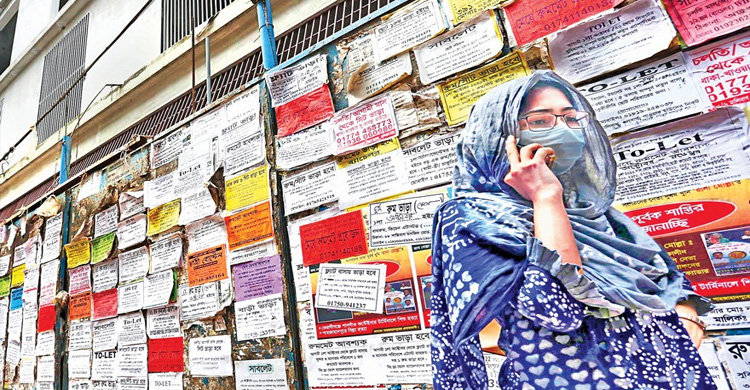
- Rent Burden and Legal Breaches With nearly 80% of residents renting, housing costs dominate household budgets. The House Rent Control Act 1991 prohibits landlords from demanding more than one month’s advance rent, yet tenants routinely pay two to three months upfront. Rent hikes are frequent—5.19% in July–September FY 2025–26 alone—despite legal restrictions against increases within two years.
- Hidden Utility Costs Rent is only the entry fee. Families must pay privately for basic services the city fails to provide. WASA water is unsafe without boiling, costing Tk 332 crore in gas annually. Gas supply is rationed, forcing households to buy LPG cylinders at Tk 2,400–2,500, nearly double the official price. Electricity shortages add further strain.
- Personal Stories of Struggle
- Sayeda Saleha, a teacher, moved four times in nine years seeking cheaper rent. Each move erased savings as water, gas, and transport costs rose.
- Sadaf, a journalist, chose Aftabnagar for peace and space, but fuel shortages forced him to relocate closer to work, sacrificing comfort for commute.
- Khaled Ahmed, a lecturer, pays one-third rent compared to colleagues but spends 3–4 hours daily commuting from Dholaipar.
- Traffic and Time Loss Dhaka is ranked the slowest city globally, with traffic averaging just 4.8 km/h—slower than walking pace. An 8 km journey can take two hours each way, draining productivity and family time.
- Women’s Safety Costs Safety forces women to pay more. Tahmina rents near her Gulshan office to avoid unsafe late-night commutes. With no reliable women’s bus service, many women trade money for security.
- Family and Education Trade-offs For dual-income households, housing choices rarely suit both workplaces. Children’s schooling often dictates location, as Rumana’s family in Mirpur demonstrates—longer commutes accepted for better education.
- Health and Environment Bangladesh ranked second-worst globally for air quality in 2025. Dhaka suffers from extreme pollution, lingering heat, constant noise, and dengue outbreaks. Exhaustion is widespread, worsened by the lack of green space—only one acre of park per 37,900 residents, far below planning standards.
- Leisure and Free Time Weekends offer little relief. Free spaces are scarce, while entertainment options require money and long commutes. Many residents, like Sumaiya, spend Fridays at home due to fatigue and traffic, often going weeks without meaningful social interaction.
- Financial Insecurity With minimal savings, households live under constant fear of rent hikes or medical emergencies. Spreadsheets track expenses but cannot predict sudden shocks.
- Infrastructure Gap Dhaka’s population grew from 410,000 in 1951 to over 20 million today, but infrastructure lagged behind. Plans were drawn up but poorly implemented. Private developers built flats for the wealthy, often on wetlands, while one-third of residents live in informal settlements.
- Core Message In Dhaka, every address demands sacrifice—money, time, or health. As one resident reflected, “He thought he was asking what I could afford. He was really asking what I had agreed to give up.”
